
A good earth pit that is not connected protects nothing. On many sites the pit is well built and measures well, but the strip from the pit to the panel is broken, corroded or was never joined. Measuring the pit alone then proves nothing. We test the path that the fault current will actually take.
What we do
- Chemical earthing, GI and copper strip earthing, earth pits and electrodes
- Earth grids for substations, plants, transformers and DG sets
- Equipotential bonding
- Lightning protection: air terminals, down conductors and ring earth
- Soil resistivity survey (Wenner method) before design
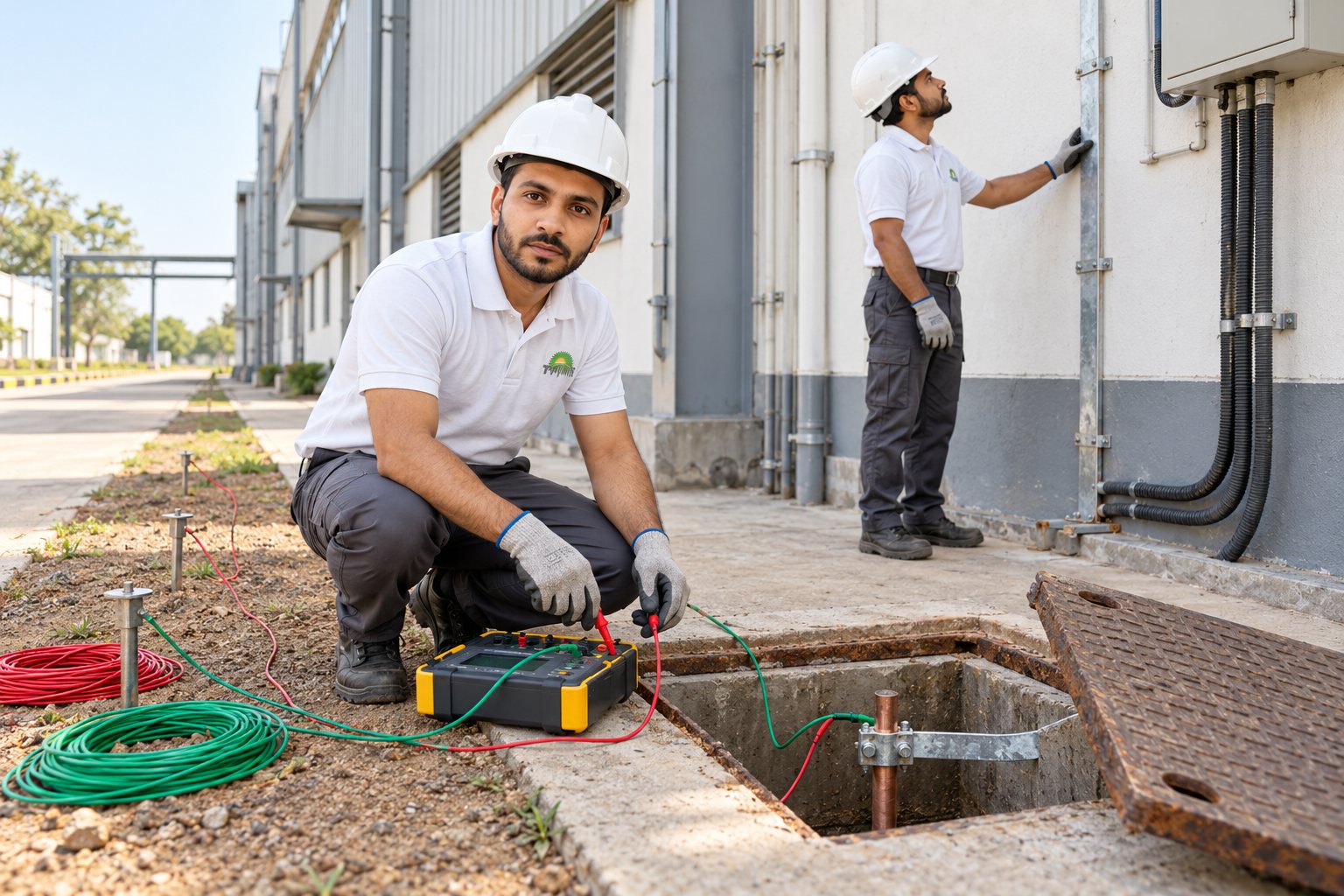
- Earth resistance testing of each pit (fall-of-potential method)
- Earth loop impedance testing of the connected path, from the equipment back to the source
What we recommend
For plant and building earthing we recommend an earth resistance under 3 ohm, and we design and install to deliver it. We size the number of pits from the measured soil resistivity and your fault current, not by rule of thumb. Design, installation and testing follow IS 3043, and lightning protection follows IEC 62305.
What you get
A test report with the measured soil resistivity, the resistance of each pit in ohms, and the loop impedance of the connected path, with every broken or missing connection listed and photographed. The report is ready for your safety file and for the electrical inspector.
Questions
How many earth pits do I need? The number comes from the measured soil resistivity and the fault current your system can deliver. We survey first and then design.
My pits were tested last year and passed. Why test again? A pit can pass while the system is unprotected. Ask whether the test covered the connection from each panel and machine back to the earth, or only the pit.
Do you also install lightning protection? Yes, as one system with the earthing.
Request a quote Call +91 76070 78408
Related: Electrical safety audit · Free Plant Health Card