
We flip a switch and expect light. We start a machine and expect it to run. The electrical system is the one part of a building we trust completely — and look at the least. That blind trust is exactly where the risk hides. An electrical safety audit is simply a health check-up for that hidden system, and in 2026 it has stopped being optional.
Why an audit matters more than ever
Walk into almost any factory, hospital, hotel or commercial building today and you find the same story: the electrical infrastructure was designed for the load of ten or fifteen years ago, but it is being asked to carry far more. Three things changed at once:
- Demand exploded. Air-conditioning, heavier machinery, servers, EV chargers and rooftop solar all pull more current through panels and cables that were never sized for it.
- Infrastructure aged. Insulation hardens, contacts corrode, joints loosen, and protective breakers slow with age — all invisible until something fails.
- The cost of failure rose. A single fault can mean a fire, an injury, a failed inspection, a voided insurance claim, or downtime that costs far more than the audit ever would.
The recent Aliganj building fire in Lucknow — preliminary cause an AC short circuit — is a hard reminder that electrical faults remain a leading cause of building fires, and that almost all of them give warning signs first.
The electrical safety audit checklist
A thorough audit is not a clipboard walk-through. Here is what a real one covers:
- Load & wiring assessment — is the wiring and panel sized for today’s load, or being quietly overloaded?
- Earthing & bonding — earth-resistance testing to IS 3043, so faults find a safe path. See earthing & lightning protection.
- Insulation resistance (IR) — testing cables and equipment for degraded insulation.
- Panels & busbars — inspection of LT/HT panels for loose terminations, clearances and condition.
- Breaker & protection testing — confirming MCBs, RCBOs, ACBs, VCBs and relays trip correctly and fast.
- Thermography — an infrared scan of live panels and joints to catch hot spots before they ignite. See thermography.
- Power factor & energy — measuring waste and PF penalties you’re paying on every bill (try our free load & bill tools).
- Documentation — a prioritised, colour-coded report mapped to IS/IEC standards that your insurer and auditor will accept.
An audit protects your people, keeps you legal and insurable, lowers your power bill, prevents breakdowns and extends equipment life — all at once.
How the audit is actually carried out
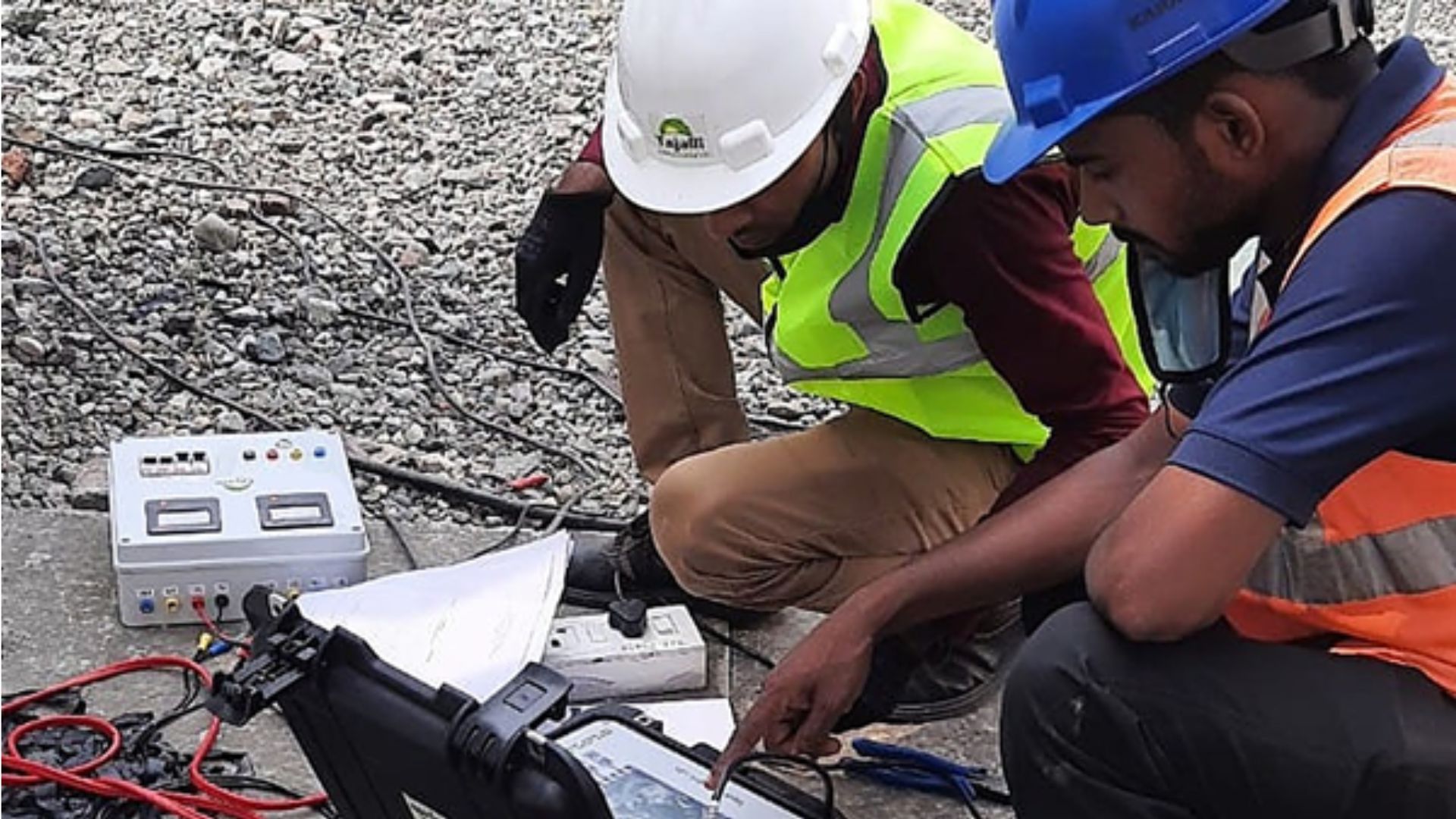
At Tajalli Tech we run it as a clean, four-step engagement:
- Survey — walk the installation, map the single-line, list panels, loads and assets.
- Test — earthing, insulation, breaker and protection testing with calibrated, NABL-traceable instruments.
- Thermography — a live infrared scan, no shutdown needed.
- Report — a clear document with findings, risk ratings (Red / Amber / Green) and a recommended action list.
What does it cost?
There is no single number — the cost scales with connected load, the number of panels and transformers, and whether thermography and full protection testing are included. A small commercial premises is modest; a multi-substation factory is more. The most honest way to find out is a quick site visit: our engineer inspects your installation and gives you a transparent, itemised quote — so you see the exact scope before committing to the audit.
Who needs one the most
Any premises with continuous or heavy load benefits, but it is especially critical for factories and industrial units, hospitals and labs, hotels and malls, coaching centres, schools and institutions, and any commercial building that has recently added AC load, EV charging or a solar plant. If your operations stop when the power does, an audit is not an expense — it is insurance.
Frequently asked questions
It depends on load, number of panels/transformers, and scope (thermography, protection testing). We provide an itemised quote after a site visit, so you see the scope before the audit.
A small premises can be done in a day; a large factory may take several. Thermography itself is quick and needs no shutdown.
Yes — a documented report with findings, test values and risk ratings, mapped to applicable IS/IEC standards. Yes — Lucknow, Kanpur, Varanasi, Bareilly and across Uttar Pradesh, with pan-India deployment for larger projects.
FAQ
The cost depends on the connected load, the number of panels and transformers, and whether thermography and protection testing are included. Small commercial premises are at the lower end; large factories with multiple substations are higher. Tajalli Tech provides a transparent, itemised quote after a site visit, so you see the full scope before committing to the audit.
A typical audit covers wiring and load assessment, earthing and insulation testing, panel and busbar inspection, breaker and protection-relay testing, power-factor review, and a full thermography scan for hot spots — delivered as a documented, prioritised report mapped to IS/IEC standards.
Once a year is a sensible baseline for most commercial and industrial buildings, and after any major change such as added air-conditioning, machinery, EV charging or a solar plant. Thermography is often done more frequently because it is quick and non-intrusive.
Audits typically reference IS 732 (wiring installations), IS 3043 (earthing), the National Building Code (NBC 2016) fire and electrical provisions, and the Central Electricity Authority safety regulations, alongside relevant IEC standards.